23 November 2026
How Can Florists Source Edible Flowers in Europe?
Presented by @petaldiary18
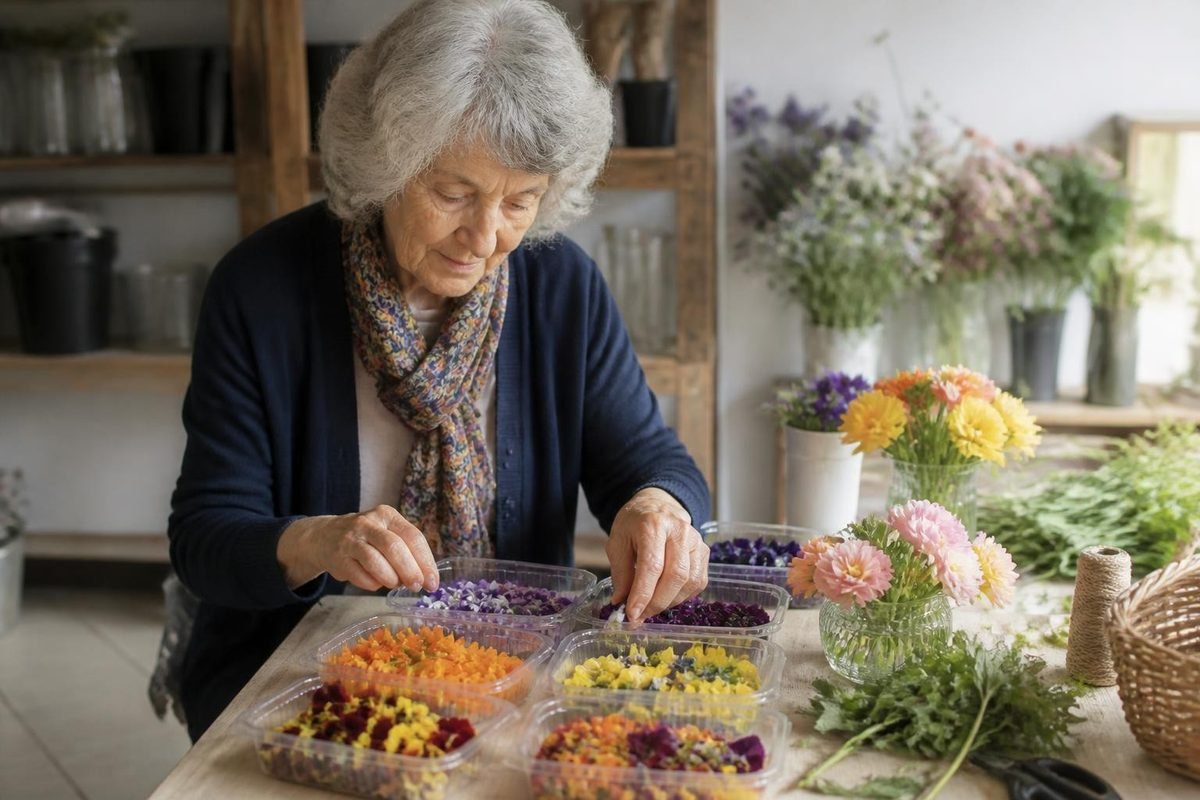
Florists in Europe can source edible flowers from growers and food suppliers who produce them for eating and can explain their growing and handling methods. No flower is literally chemical free, so ask for specific information about pesticides, treatments and food safety rather than relying on that label.
Start with growers who supply food
Look for local flower farms, market gardens and specialist edible flower growers that already supply restaurants or other food businesses. A grower who cuts flowers for a plate may pack and store them differently from one who sells stems for a vase.
Ask which flowers are available through the season and how soon they can be delivered after cutting. A small punnet of fresh blooms may suit a cake order better than a large mixed box that will sit unused in the fridge.
Check how the flowers are grown
Organic certification can be a useful starting point, but it does not mean that no substances have been used. Ask the supplier for the details behind any claim, including treatments used during growing and after harvest. If a customer needs flowers grown without a particular pesticide, put that request to the grower and get an answer in writing.
Before placing an order, ask for:
- The common and botanical name of each flower.
- Confirmation that it was grown and handled for eating.
- Details of pesticides and other treatments used.
- Harvest, storage and delivery guidance.
- A way to trace the flowers back to the grower and batch.
Keep food flowers separate
Flowers sold for decoration are not automatically suitable for food. Do not assume that a familiar bloom from the florist bucket can go on a cake. Decorative stems may have been treated or handled in ways that make them unsuitable for eating.
Keep edible stock in clean, food suitable containers, away from sprays, dirty tools and decorative flowers. Follow the supplier's storage instructions. Wash flowers only as advised, since excess moisture can damage delicate petals and affect their keeping quality.
Check the rules for your business
Requirements depend on where you operate and what you do with the flowers. Selling a sealed pack, repacking loose blooms and placing petals on food can involve different responsibilities. EU food rules apply in EU countries, while other European countries have their own requirements.
Ask your local food safety authority what registration, hygiene, labelling and traceability rules apply to your work. Keep supplier records and pass on relevant storage and handling information to customers.
Common questions
Are all organic flowers edible?
No. Organic growing does not make an unsafe species edible or establish that flowers were handled as food.
Can I use flowers from a garden?
Only if you can identify them confidently, know how they were grown and handled, and meet the rules for supplying food. Roadside or unknown garden flowers are a poor choice.
Can customers eat every part of an edible flower?
Not necessarily. Some flowers have only certain edible parts. Check the species and preparation guidance with a reliable food safety source before giving customers instructions.
Take a look at https://kunstforum-piaristen.com/blumen-als-motiv-in-europas-kunsthauptstaedten-von-wien/